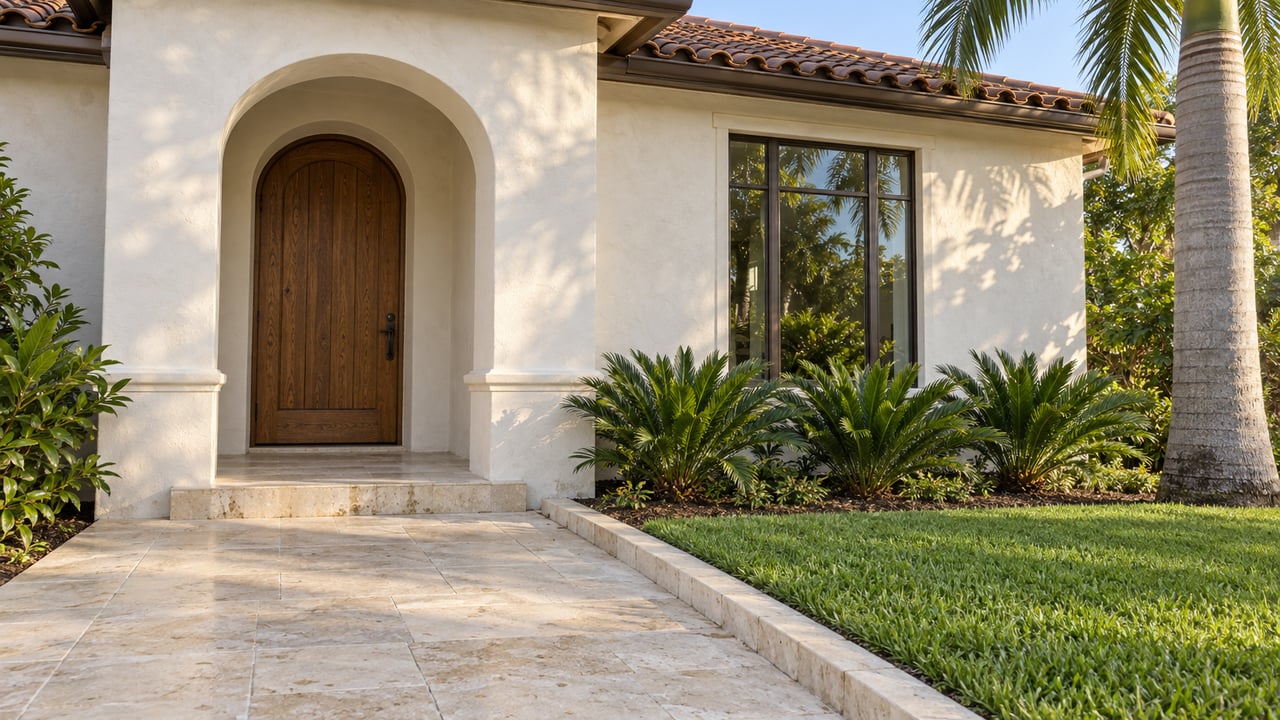
On September 18, 2025, the Coral Gables Historic Preservation Board turned down the owners of 1258 Obispo Avenue. They had asked to demolish their house, a contributing residence in the Obispo Avenue Historic District, on grounds of undue economic hardship. The Board rejected the hardship claim and denied the Special Certificate of Appropriateness. Four days later the owners filed notice of appeal. The City Commission took up the appeal on October 28, deferred it to November 18, continued it at the owners' request to December 9, and then reversed the Board 3–2 in Resolution 2025-471.
The appeal alone took 82 days from the Board's denial to the Commission's vote. The original application had already gone through staff review and a Board hearing before that. Local coverage from the Coral Gables Gazette reported that the October deferral came because appraisal and engineering material was incomplete, and that the item took roughly 75 minutes of presentations and discussion. The owners won in the end. The architect board did not make that decision. The historic process did, and through all of it the house was not ready for design review.
That order is what a teardown buyer in Coral Gables is really underwriting. Most guides to building here start with the Board of Architects. For a house that comes down, the first approval comes from the preservation side, and its schedule partly depends on the public.
The clock that runs before design review
The Board of Architects reviews new residences and building expansions. Projects generally need its preliminary and final approval before a typical building permit. The city's application for a new home, though, asks for more than drawings and a survey. If an existing house is being demolished, the package must include a historical-significance determination. Substantial renovations and demolition-related alterations also trigger historical documentation, and designated properties or properties in a district need separate Historic Resources review.
So the preservation step sits upstream of the design step. Section 8-107(G) of the zoning code, as amended by Ordinance 2023-03, lays out how that step works for buildings that are not designated:
- The Historic Preservation Officer or a designee must approve every demolition permit for a non-designated building.
- Once the approval is posted online, any citizen has 10 days to appeal it.
- If an appeal is filed, a completed designation report is due within 21 days of the notice of intent to appeal.
- If the officer finds the building may be eligible for designation, staff makes a preliminary eligibility determination within 45 days of submittal.
- The Historic Preservation Board's final hearing on local designation must happen within 90 days of that determination. Board consideration can be deferred if the owner and the officer agree.
- The city can require an independent analysis by a consultant it selects, such as appraisals, archaeological assessments or historic assessments, and the applicant pays the fees.
- An approval stays valid for 18 months. If the Development Services Department has not issued the demolition permit by then, the approval expires.
Add steps four and five together and a house the officer flags can spend up to 135 days in eligibility review before the Board decides whether it becomes a landmark, and that only counts deadlines that are written down. Step two matters most for a buyer. The 10-day appeal window is open to any citizen, and the house in question can have no designation at all. A clean approval letter does not count as final until that window closes.
Step seven matters for an investor holding the property. Eighteen months sounds generous until it has to cover design development, architect board review cycles and permitting. If design review drags, the demolition approval can expire before the permit is pulled.

What the paperwork costs
The fees are modest compared with Coral Gables land prices. The schedule does show where the cost actually lands. The city's fee schedule published October 1, 2025 lists these:
Item | Fee |
|---|---|
Historical-significance determination | $761.25 |
Standard or special Certificate of Appropriateness | No processing fee |
Board of Architects review | $2.67 per $1,000 of estimated construction cost, nonrefundable |
Board of Architects resubmittal | $76.13 |
Board of Architects public posting | $45.68 |
Board of Architects late fee | $152.25 |
On a hypothetical $1.5 million build, the Board of Architects review fee comes to about $4,005. Filing fees are not the real exposure. Time is, along with the open-ended line in the ordinance that lets the city require consultant appraisals and historic assessments at the applicant's expense.
The hardship route that 1258 Obispo took costs more again. It requires a public Board hearing within 60 days and a heavy evidence package. That package includes two recent appraisals from separate Florida-certified appraisers, the purchase price and date, taxes, debt service, any sale or rental listings, and a consideration of adaptive use. An owner on this path is putting their own carrying costs on the public record in front of the Board.

The design clock, once you reach it
After the preservation step clears, the Board of Architects schedule takes over. Per the city's application, the Board meets Thursdays at 8:30 a.m. Submissions are due by Friday at noon for the following Thursday, and fees must be paid by the Monday before the meeting. Any project over $75,000 has to be publicly posted at least five business days before review. A new home also needs a current boundary and tree survey, a neighborhood context study and a tree disposition plan.
The city does not publish an average approval time. A local construction firm's April 2026 guide estimates 3 to 8 weeks per review cycle and 2 to 4 cycles for most projects, which puts major projects at 4 to 8 months. Those figures are one contractor's experience, not a city service standard. That guide also describes meetings as twice monthly, and the city's own page says weekly. When the two disagree, the city's published process is the one to plan around.
Even small decisions can go a long way. In 2025, a proposed garage door at 6901 Trionfo Street went from a Board of Architects Special Master decision that upheld the denial to a City Commission appeal, where it was adopted as amended.
How finely the preservation board works
For renovation buyers, the preservation side's reach goes down to individual structures. The Historic Preservation Board's April 23, 2026 meeting, covered by the Gazette, shows the level of detail.
- 547 Alcazar Avenue: A request to enclose the open porch of a contributing home failed 4–2 and was continued to May 21.
- 1144 Milan Avenue: At this landmarked property, the Board unanimously approved demolishing the original detached garage, even though staff had recommended preserving or repurposing it.
- 1015 Sevilla Avenue and 826 Medina Avenue: The Board approved demolition of auxiliary structures, not the houses.
These are ordinary items: a porch, a garage, outbuildings. On designated or contributing properties, the scope a buyer assumes for a renovation is settled one element at a time at a public meeting, and the outcome does not always follow the staff recommendation.
The survey that could move the clock earlier
Most of this happens one property at a time. A draft study now before the city could change that in the northeast corner of Coral Gables. The North Ponce & Flagler Section Historic Property Survey, prepared by the Miami firm Plusurbia Design, inventories 556 historic architectural resources in the two neighborhoods. The draft describes the Flagler Section as land originally planned as a business district that became a mostly single-family neighborhood in the 1940s.
According to the report, building the inventory before individual properties face demolition permits or historical-significance reviews could cut down on research now done "case-by-case" and give owners and developers more predictability. Listing in the survey does not designate a property. City Historical Resources staff would still decide eligibility one property at a time, using the survey as a guide. The report also notes that zoning changes in North Ponce over the years have led to the demolition of older, smaller buildings, single-family homes among them.
In its August 17, 2026 report, the Gazette said the draft was expected to go before the Historic Preservation Board and then the City Commission this fall. We have not confirmed a hearing date as of early October. For anyone looking at a house in the Flagler Section with a teardown in mind, the survey matters because it puts the preservation question on paper before the closing instead of after it.

A few direct questions
Does a house need to be designated for historic review to apply? No. Under Section 8-107(G), every demolition permit for a non-designated building needs the Historic Preservation Officer's approval, and any citizen can appeal that approval within 10 days of online posting.
What recent design-code change affects a renovation's materials? Ordinance 2025-37, adopted December 9, 2025, allows composite recycled materials for trellises, decks, pavers and walkways.
Can the Commission overturn the Historic Preservation Board? It has. In the 1258 Obispo case, the Commission found the record lacked competent substantial evidence to support the Board's decision and granted the owners' appeal 3–2 on December 9, 2025.
A Coral Gables teardown is priced like land, but it is approved on a historic-review schedule that sets when building can start. At The Kotelsky Group, we map that schedule before an offer goes in. That means asking whether the house is designated or contributing, whether the seller holds a significance determination and when it was issued, and how much of the 18-month window is left. If you are weighing a teardown or a major renovation in Coral Gables, let's go through the preservation clock on your target property together.