If you are comparing oceanfront condos in Sunny Isles Beach as an investment, the view is only the starting point. In this market, two units with similar square footage and the same stretch of sand can perform very differently based on building age, reserves, rental rules, and the type of buyer each tower attracts. If you want to make a smarter purchase, you need to look past the finishes and underwrite the building itself. Let’s dive in.
Why Sunny Isles demands a building-first approach
Sunny Isles Beach is a small barrier island city in northeastern Miami-Dade County, developed primarily for residential use. Because the market is so concentrated and tower-driven, your investment results often depend more on the condominium association and the building’s long-term condition than on the individual unit alone.
That matters even more in a selective market. In Q4 2025, Sunny Isles Beach condo and townhome sales totaled 179 closed transactions, with a median sale price of $705,000 and an average sale price of $1.594 million. The market also carried 1,161 active listings and 21.7 months of supply, which points to a market where buyers can be choosy.
Cash is another major theme. Of those 179 closed sales, 128 were cash deals, or about 71.5% of all closings. For you as an investor, that suggests you are competing in a market shaped by cash buyers, second-home purchasers, and globally minded investors who tend to focus heavily on building quality and exit potential.
What investors should compare first
When you compare Sunny Isles oceanfront condos, start with the variables that can change your carrying costs, rental strategy, and resale options.

Building age and required oversight
Older towers are not automatically weaker investments, but age directly affects your due diligence. In Miami-Dade County, buildings must go through recertification at 30 years of age and every 10 years after that. For condominium and cooperative buildings three stories or taller within three miles of the coast and built on or after 1998, the first recertification trigger is 25 years.
Florida law also requires a structural integrity reserve study for qualifying associations, with a Dec. 31, 2024 deadline for associations that existed on or before July 1, 2022 and meet the statute’s criteria. That means reserve funding and major repair planning are no longer side issues. They are central to your underwriting.
Miami-Dade also requires a written report from a Florida-registered engineer or architect within 90 days of notice in the recertification process. If a building does not comply, the county can pursue civil violations and unsafe-structure enforcement. For you, that means deferred maintenance is not just a cosmetic concern. It can become a timing and cost issue that affects both ownership and resale.

Reserves, assessments, and capital projects
One of the biggest investor mistakes in Sunny Isles is focusing too much on purchase price and not enough on association health. Before you move forward on any oceanfront condo, compare:
- Current association budget
- Reserve funding levels
- Structural integrity reserve study status
- Recertification history
- Pending or recent special assessments
- Upcoming capital projects
- Insurance deductibles
These details can change the real cost of ownership in a big way. A lower-priced unit in a building with underfunded reserves or pending work may be less attractive than a more expensive unit in a stronger association.
Rental rules and use restrictions
Rental flexibility in Sunny Isles is highly building-specific. The city defines short-term vacation rentals in condominiums and apartments as leases of six months or less, and owners must meet city licensing and business tax requirements. The city also requires proof of state and county tax registrations, a DBPR transient lodging license, liability insurance, a rental agreement, a platform list, emergency-exit and parking documentation, and either a condo association consent letter or a copy of the bylaws.
The operational side matters too. Owners or responsible parties must be available 24/7 and able to respond in person within one hour. Occupancy is capped at two persons per bedroom plus two additional persons, up to a maximum of 12.
So if your plan involves seasonal leasing or shorter rental windows, you need to confirm not just city rules, but also the exact condo association policy. In Sunny Isles, two neighboring oceanfront buildings can have very different investment profiles simply because their lease rules are different.

Comparing legacy towers and newer branded buildings
Not every Sunny Isles oceanfront condo serves the same buyer. Some towers appeal to broader resale demand, while others target a smaller, more luxury-driven niche.
Legacy large-format towers
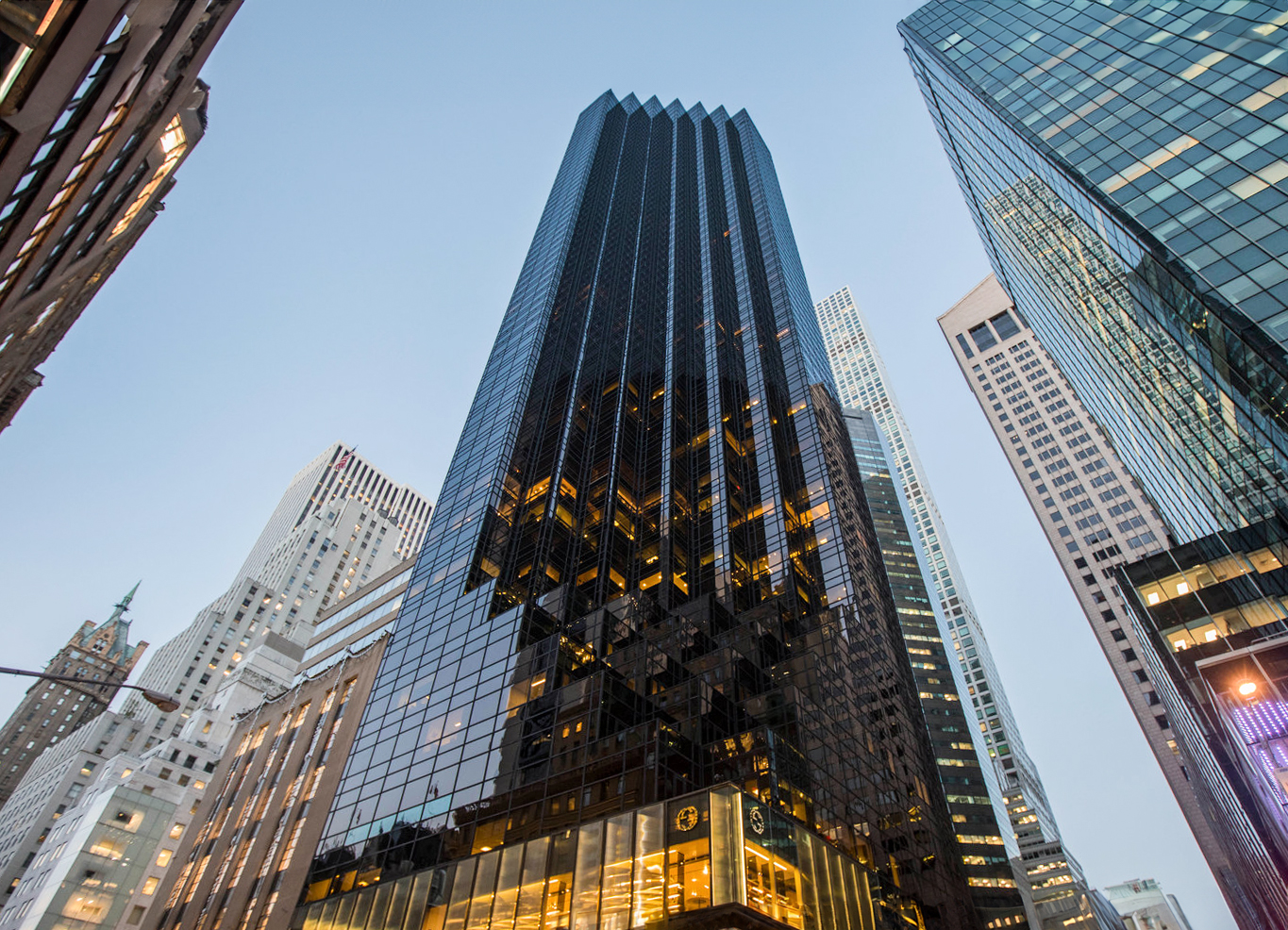
Large established towers often offer a more standardized resale story. Trump Towers Sunny Isles is marketed as an 813-unit, 45-story oceanfront condominium with a heated pool, spa, fitness center, poolside bar, and beachfront cabanas. Trump Grande adds features such as a lagoon pool, Jacuzzis, waterfalls, a tennis center, a spa, and concierge service.
For investors, this type of building can appeal because the buyer pool is often wider. Established full-service towers may attract lifestyle buyers, second-home owners, and investors who want a recognizable product with familiar amenities and a more liquid resale profile.
Newer branded luxury towers
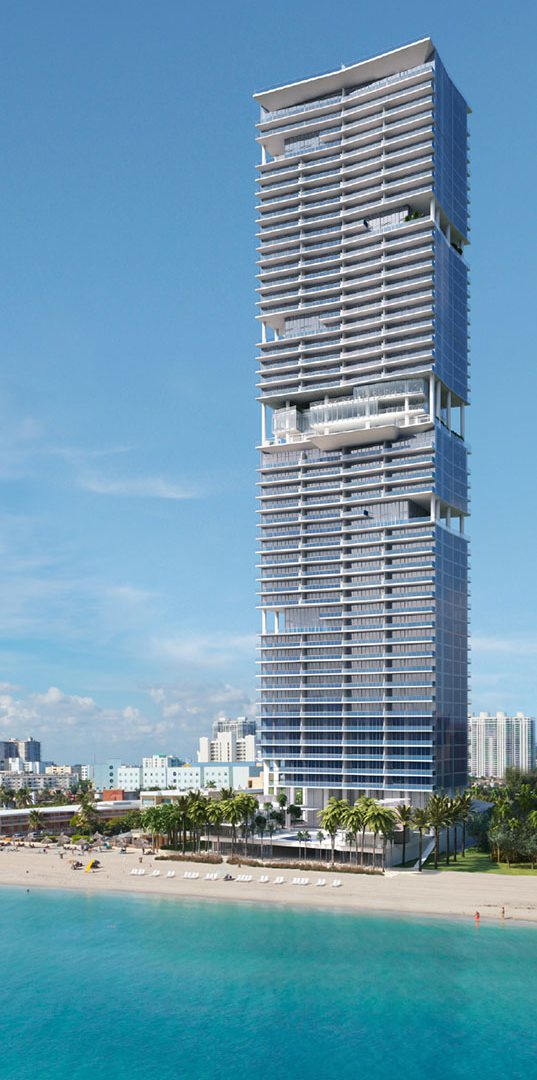
Newer branded buildings usually compete on exclusivity, service, and scale of amenities. Turnberry Ocean Club advertises more than 70,000 square feet of amenities across six levels, plus beach service, guest suites, cabanas, concierge, and private garages. Acqualina and the Estates at Acqualina market resort-style services, outdoor sanctuaries, indoor amenity areas, furniture-ready residences, and smart-home technology.
This product type often attracts end-users and second-home buyers who are willing to pay for brand prestige and high-touch service. If your exit strategy depends on selling into that audience, the branding and amenity package may support value. But your buyer pool may be more specialized than in a larger legacy tower.
Ultra-niche luxury product
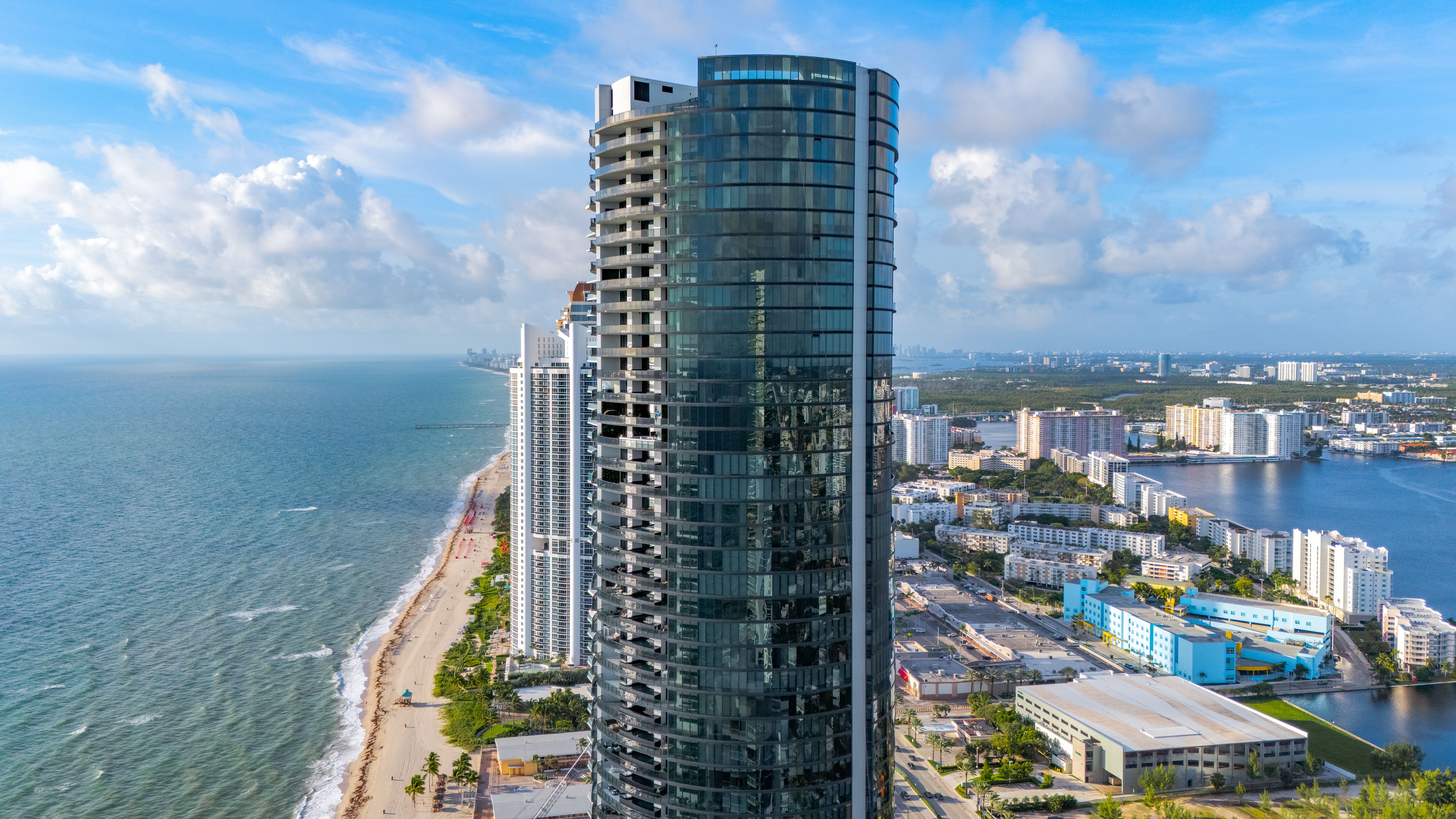
Some buildings stand out through highly specific features. Porsche Design Tower highlights an automated car-elevator system, plunge pools, outdoor summer kitchens, a private restaurant and lounge, and car concierge service.
That kind of differentiation can support a premium. It can also narrow the future buyer pool, which is important if you value flexibility and broad exit liquidity. A unique product is not always the easiest product to resell quickly.
How buyer profile affects your exit strategy
A strong condo investment is not just about what works for you today. It is also about who is likely to buy from you later.
Sunny Isles has a notably international and cash-oriented buyer base. MIAMI Realtors reported that 72% of Miami foreign buyers reside outside the U.S., Miami-Dade accounts for 65% of Miami foreign-buyer sales, and 52% of new condominium buyers are foreign buyers, with 86% of those buyers coming from Latin America. Sunny Isles Beach also ranked among South Florida’s largest vacation-home markets in 2025, with $1.1 billion in sales volume and a 9.0% year-over-year increase.
That mix helps explain why some buildings perform better with seasonal users, second-home buyers, and cash investors than with traditional owner-occupants using financing. If you are buying for appreciation and future resale, think carefully about whether your target building appeals to a broad international second-home audience, a luxury end-user profile, or a more niche buyer segment.

Older buildings can still make sense
It is easy to assume that newer towers always make better investments, but the market data does not fully support that. In 2025, MIAMI Realtors reported that condominiums 25 years and older had a median 78 days on market, compared with 93 days for condos under 25 years.
That does not mean older buildings are safer or better. It does show that older product can still trade efficiently when it is priced correctly. For you, the takeaway is simple: do not dismiss an older oceanfront condo just because of age. Instead, look closely at reserves, recertification, maintenance history, and future repair exposure.

A practical way to compare Sunny Isles condos
When you narrow your shortlist, use the same scorecard for each building so you can compare apples to apples.
Your investor comparison checklist
- Building age and recertification timeline
- Structural integrity reserve study status
- Reserve funding strength
- History of special assessments
- Planned capital improvements
- Amenity package and maintenance burden
- Rental restrictions and lease minimums
- Insurance deductibles and operating risk
- Unit mix and likely buyer profile
- Fit with your exit strategy
This approach helps you move beyond surface-level marketing. A building with impressive amenities may look strong at first glance, but if the lease policy limits your income plan or the association faces major near-term costs, the investment story changes fast.

Where local guidance matters most
In Sunny Isles, the smartest investment insights are often buried in condo documents, not listing photos. The real difference between a strong purchase and a risky one usually comes down to maintenance history, future work, reserve planning, and use restrictions.
That is where experienced guidance can save you time and money. When you compare oceanfront condos through an investor lens, you need more than a tour and a price-per-square-foot estimate. You need someone who can help you evaluate how each building’s rules, costs, and buyer profile line up with your actual strategy.
If you are weighing oceanfront condo opportunities in Sunny Isles Beach, The Kotelsky Group can help you compare buildings, evaluate investment fit, and move forward with a clear plan.

FAQs
What should you compare first when evaluating Sunny Isles oceanfront condos for investment?
- Start with building age, reserve funding, recertification history, pending assessments, rental rules, and the likely buyer pool for that specific tower.
How do Sunny Isles Beach rental rules affect condo investors?
- The city treats leases of six months or less as short-term vacation rentals and requires licensing, tax registrations, insurance, documentation, and association approval or bylaws support, so building rules must match your rental strategy.
Are older oceanfront condos in Sunny Isles Beach always riskier investments?
- Not always. Older buildings can still sell efficiently, but you should carefully review maintenance history, reserve studies, recertification status, and any upcoming capital projects.
Why does buyer profile matter when buying a Sunny Isles Beach condo?
- Your future resale depends on who is most likely to buy in that building, whether that is a cash investor, international second-home owner, or luxury end-user.
What types of Sunny Isles oceanfront buildings appeal to different investors?
- Large legacy towers may offer broader resale appeal, while newer branded buildings and niche luxury towers may support premium pricing but can attract a narrower buyer pool.