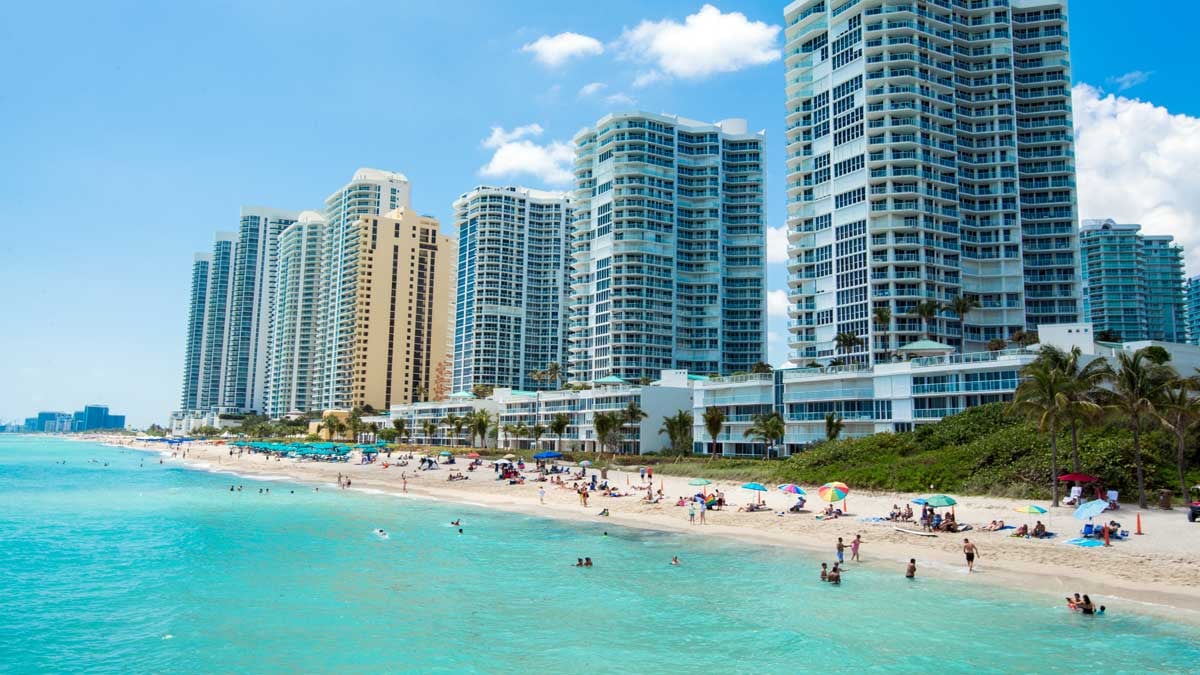
Two condos sit less than two miles apart on the same stretch of Collins Avenue. Both have ocean access. Both have doormen. On paper, a buyer scanning listings would assume the price difference between them comes down to renovation quality, view lines, maybe a marble lobby versus a terrazzo one. It doesn't. As of late August 2026, condos in Sunny Isles Beach's oldest buildings were priced roughly 77 percent below the citywide average asking price of just under $1.9 million, while the city's newer branded towers sat in what market trackers call a severe buyer's market, carrying nearly 22 months of unsold supply despite record prices per square foot. Neither number is really about age. Both are about a 2022 law that finally came due this year, and about what happens to a coastal condo market when a reserve fund stops being optional.
What Actually Split the Market
Florida's Senate Bill 4-D passed in 2022, months after the collapse of Champlain Towers South in Surfside killed 98 people. It required any condo building three stories or taller to complete a Structural Integrity Reserve Study, an engineering-backed accounting of what the roof, load-bearing walls, foundation, plumbing, electrical systems, and waterproofing will cost to repair or replace, and when. Senate Bill 154 in 2023 clarified the ten-year update cycle. House Bill 913 in 2025 gave boards some flexibility on how to fund the gap, through a lump-sum assessment or a loan against association assets, but not on whether to fund it.
The milestone inspection piece of the law hits buildings at 30 years old, or 25 years if they sit within three miles of the coast. Nearly the entire oceanfront corridor of Sunny Isles Beach qualifies at the 25-year mark. That means the wave of towers built through the 1990s, the ones that gave the city its skyline before the 2000s luxury boom, are now the ones facing engineers with clipboards.
The financial trigger landed on a specific date. For any association with a budget adopted on or after December 31, 2024, waiving or reducing structural reserves is no longer a vote the board can take. Full funding under the study became mandatory as of January 1, 2026, eight months before this writing. Buildings that spent decades keeping monthly fees low by underfunding reserves now have to catch up all at once.

What the Two Segments Actually Look Like
Winston Towers is a useful anchor here. The seven-building complex on 174th Street went up in phases starting in 1971, with its last two buildings completed in the early 1980s. Over the twelve months ending in August 2026, 84 units changed hands there at an average sale price of $365,414, or roughly $257 a square foot, taking an average of 171 days to close. Nearby, the oceanfront Oceania towers, built between 1990 and 1994, trade in a similar range. These numbers track closely with the citywide estimate that older-building inventory is running at roughly a quarter of the overall market average.
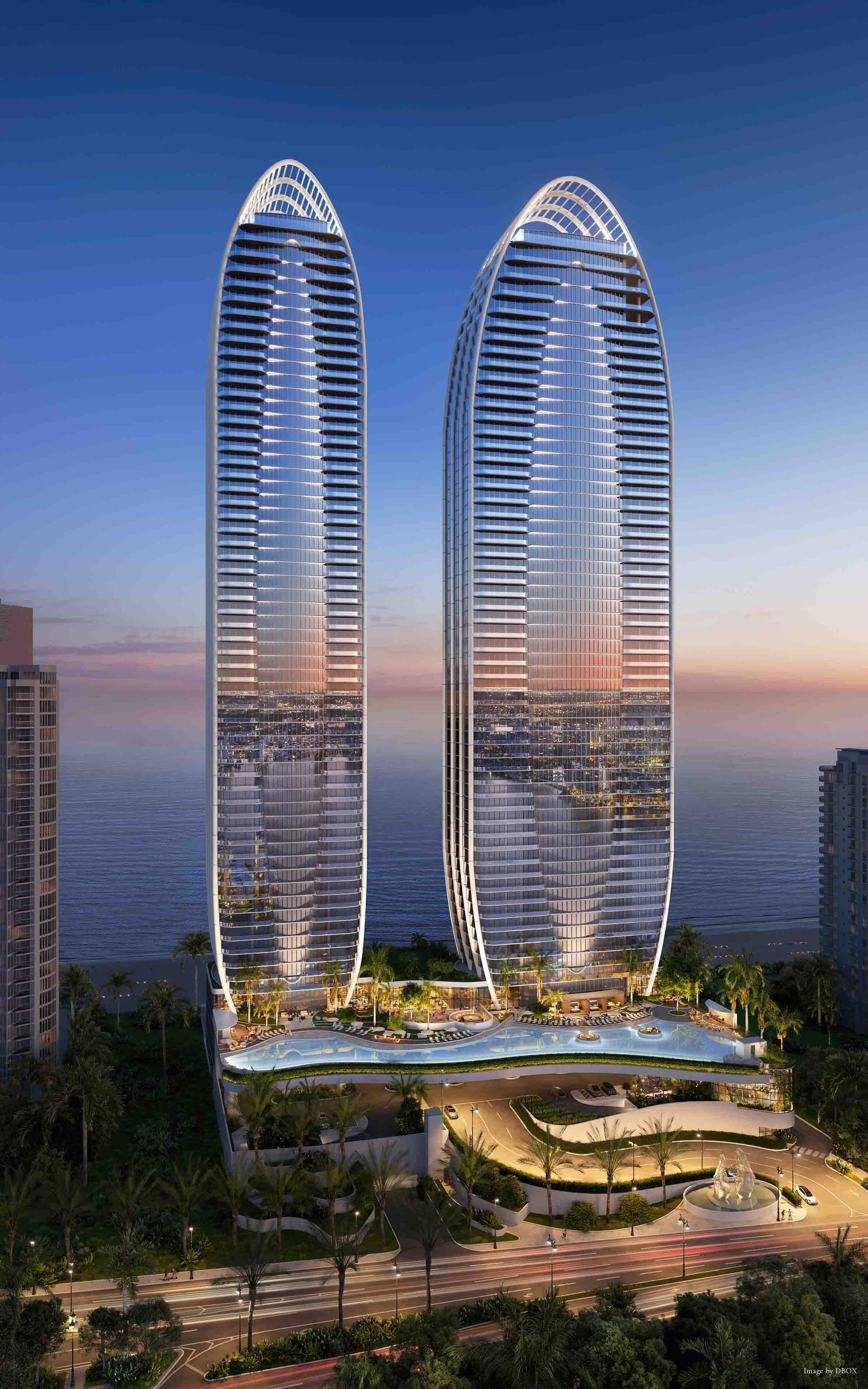
Compare that to what a branded oceanfront tower commands. Resale units at Porsche Design Tower have listed between $3.7 million and $14.6 million, averaging somewhere between $1,800 and $2,200 a square foot for oceanfront positions. The Estates at Acqualina, a two-tower, 265-residence development completed in 2022, has produced a widely reported penthouse sale at $27 million. Bentley Residences, a 60-story oceanfront tower built around an in-residence car elevator concept, anchors what market watchers describe as the most consequential pre-construction pipeline the city has seen.
Citywide, the median asking price for a Sunny Isles Beach condo rose to $1,092,500 in the fourth quarter of 2025, up from $987,000 the quarter before, while average days on market for the luxury segment ran 135 to 138 days from the fourth quarter of 2025 through the first quarter of 2026, the longest of any major Miami luxury submarket. That combination, rising price alongside slowing pace, is the tell. It is not a market where demand disappeared. It is a market where two very different kinds of hesitation are operating on opposite ends of the price scale at the same time.
Older, pre-1990s stock | Newer branded towers | |
|---|---|---|
Typical example | Winston Towers, Oceania I-III | Porsche Design Tower, Estates at Acqualina, Bentley Residences |
Price position | Roughly 77% below citywide average asking price (late Aug. 2026) | $1,800-$2,200/sqft oceanfront resale range |
What's slowing sales | Assessment and reserve-funding risk, financing eligibility | Nearly 22 months of unsold supply |
Main buyer concern | What's owed, and to whom | Whether the ask reflects what's actually closing |
The Assessments Behind the Discount
The dollar figures explain why buyers are pricing older buildings the way they are. Special assessments tied to catching up on structural reserves have run from roughly $30,000 to $150,000 per unit across Miami-Dade's older high-rise stock, and a handful of larger towers in northeastern Miami-Dade have issued assessments as high as $400,000 per unit when the scope covers multiple systems at once. That is not a hypothetical repair bill. It is a debt that attaches to the unit, and it follows whoever owns it when the assessment is levied, buyer or longtime resident alike.
Financing has tightened in step. Fannie Mae eliminated limited-review underwriting for condo loans on August 3, 2026, a change that pushes more scrutiny onto exactly the building-level financial disclosures SB 4-D now requires associations to produce. Buildings with litigation, thin reserves, or unresolved milestone findings risk becoming ineligible for conventional financing altogether, which narrows the buyer pool down to cash purchasers or higher-rate portfolio loans. That shrinking pool is arguably doing more to hold down prices in older buildings than any cosmetic issue with the units themselves.
Miami-Dade County has built a partial offramp. The county offers loans of up to $50,000 to condo owners covering costs tied to special assessments, a program administered through the city's condominium resources page. It won't cover a six-figure assessment on its own, but it matters for owners facing the more common $30,000 to $75,000 range.
Why the Newer Towers Aren't the Automatic Safe Choice
It would be easy to read all of this and conclude that newer construction is simply the safer buy. The supply numbers argue against that. Nearly 22 months of unsold inventory in the premium tier means sellers are competing against each other, not just against the calendar. Rental data tells a similar story from a different angle. Landlords in Sunny Isles Beach were asking a median of $5,300 a month for units in the first half of 2026, while leases were actually completing at a median of $2,950 over that same period. That gap between ask and close, in both the sales and rental markets, suggests pricing built during the 2020-2022 run-up hasn't fully caught up to what buyers and renters are actually willing to pay in 2026.
Mortgage rates add another layer. The 30-year rate had drifted back above 6.7 percent by late August 2026, up from just under 6 percent in February. Every quarter-point move changes the math on a $2 million purchase more than it changes the math on a $400,000 one, which helps explain why the premium tier's slowdown shows up as stalled absorption rather than falling prices. Sellers there are choosing to wait rather than cut, at least so far.
A Framework for Reading a Listing Here
None of this means either segment is a bad place to buy. It means the price alone doesn't tell a buyer what they need to know. Before writing an offer on a Sunny Isles Beach condo in 2026, the questions differ by building type.
- For a pre-1990s building, ask for the milestone inspection report and Structural Integrity Reserve Study directly. Florida law entitles a prospective buyer to the inspector's summary and the association's reserve study, or a written statement that none exists, and a seller who can't produce these quickly is telling you something.
- Ask what percentage of the SIRS-recommended reserve is currently funded, not just what the current monthly fee is. A low fee in an underfunded building is a future assessment, not a bargain.
- For a newer tower, ask what units have actually closed in the past 90 days, not just what's listed. A record price per square foot on paper means little if the last three closings came in 8 to 10 percent under original ask.
- Confirm the building's Fannie Mae and Freddie Mac eligibility status before assuming conventional financing will be available at closing. This matters in both segments, but for different reasons.
Buyers who bring this framework into a Sunny Isles Beach showing are working with the same information sellers and lenders already have. That is the whole point.
A Few Direct Questions
Does a milestone inspection automatically mean a special assessment is coming? Not automatically. A clean Phase 1 inspection with no flagged structural items can mean an association's existing reserve plan is adequate. The risk rises when a Phase 1 report flags deferred maintenance that triggers a more detailed Phase 2 inspection, which is where the larger assessment figures tend to originate.
Is every condo built before 1990 in Sunny Isles Beach facing the same exposure? No. Reserve health varies building by building even among neighbors of similar age. Two buildings finished a year apart can be in entirely different positions depending on how consistently their boards funded reserves before SB 4-D made funding mandatory.
Can a buyer negotiate an outstanding assessment into the purchase price? Yes. It is common in 2026 for a seller to either pay off an assessment balance at or before closing or agree to a price reduction equal to the assessment amount. Getting full disclosure of any pending or approved assessment before the offer stage, not after the inspection period closes, is what makes that negotiation possible.
Reading a Sunny Isles Beach condo listing in 2026 means reading two different risk profiles wearing the same skyline. The Kotelsky Group works both sides of this market regularly, from reserve-study due diligence on older towers to absorption tracking in new construction. If you're weighing a purchase here, get a clear read on where a specific building actually stands before you make an offer. Get a Free Home Valuation Today.