Since August 3, 2026, a conventional loan on an older Edgewater condo has depended on the building's finances as much as on the borrower. Fannie Mae ended its Limited Review option and Freddie Mac ended its Streamlined Review, so a financed buyer now arrives with a lender who wants to see the association's budget, reserves and inspection history before closing.
For a mid-century building on Biscayne Bay, a second buyer has always been part of the story. That buyer is a developer who wants the land under it. The question for anyone pricing one of these units this fall is which of those two buyers actually sets the number. The evidence from 2026 points to the first one. The second one is real, but it moves on a timeline measured in years.
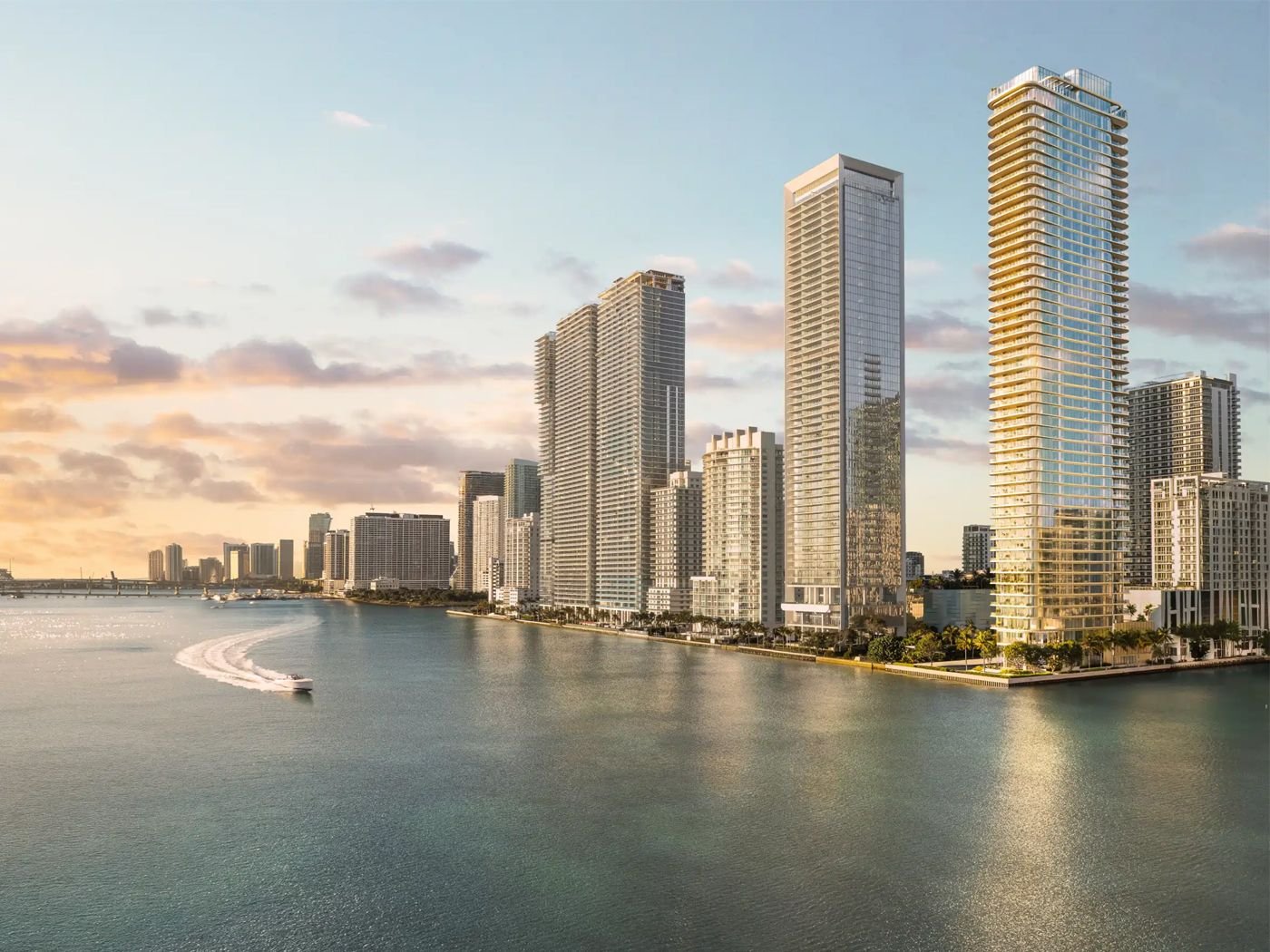
What changed on August 3
Under the old system, many established condo buildings could get a conventional loan without the lender looking closely at the association. That shortcut is gone for loan applications dated on or after August 3, 2026. Lenders could adopt the change early, but the cutoff is the application date, not the closing date. Established projects now go through Full Review unless they qualify for a waiver.
In practice, here is what Fannie Mae's guide asks a lender to work through on an established building:
- Recent reports. No new inspection is required, but the lender must review any structural or mechanical report completed in the preceding three years and confirm that required local inspections were passed.
- Critical repairs. A failed required inspection or an unresolved critical repair makes the project ineligible.
- Reserves versus assessments. A special assessment cannot stand in for the budget's reserve allocation. An assessment or association loan can pay for repairs, but repairs tied to safety, structure or habitability must be finished before the building becomes eligible again.
- Reserve studies. The Real Deal reported that lenders using a reserve study must now verify the budget uses the highest recommended reserve allocations, and can no longer rely on a baseline funding method that lets the reserve balance approach zero.
- Documentation. The standard condo questionnaires are optional forms. If they don't answer enough, the lender has to get other documentation, and a loan on a project the lender can't confirm as eligible can't be sold to Fannie Mae.
In its August 5 report, The Real Deal said full review could slow loan processing or kill deals, especially in projects with thin reserves. In a follow-up, the outlet quoted Robert Smith, a regional president at FirstService Residential: "The biggest difference is that buyers now need to evaluate the financial health of the condominium association just as carefully as they evaluate the home itself."

The same rule loosened other limits
It would be easy to read August 3 as pure tightening, and that isn't accurate. The March 2026 package that set it up also retired Fannie Mae's 50% investor-concentration cap for established projects under Full Review, and Freddie Mac retired Florida-specific loan-to-value limits for certain established-project reviews. U.S. Rep. Byron Donalds described the change as a win for Florida. He said Florida borrowers had faced 25% down under Limited Review, compared with 3% to 5% down on nationwide terms. That is his summary, not a loan-level promise.
Small buildings also get a different path. Projects of 10 or fewer units may qualify for a review waiver, and buildings of 5 to 10 units generally must sit outside a master association or larger development. Fannie Mae's waiver still requires that the project not be flagged "Unavailable" in its system and that it meet insurance standards. Freddie Mac's exemption requires that the project have no critical repairs. That flag is hard for a buyer to check ahead of time, because Fannie Mae's Condo Status Finder is built for associations, managers and authorized advisors, and Fannie says it does not disclose eligibility decisions to the public.
There is one more date on the calendar. For applications dated on or after January 4, 2027, Fannie Mae's minimum replacement-reserve allocation under Full Review rises from 10% to 15% of annual assessment income. A building that clears review this fall could have a harder test by winter.
The net effect sorts Edgewater's older buildings by their paperwork. A proactive association gets financed buyers on easier terms than before. A building with thin reserves or open repairs loses them. The Real Deal's follow-up made the same point, saying associations that have been proactive will benefit and that the premium could show up in pricing.
The other buyer on the bay took seven years
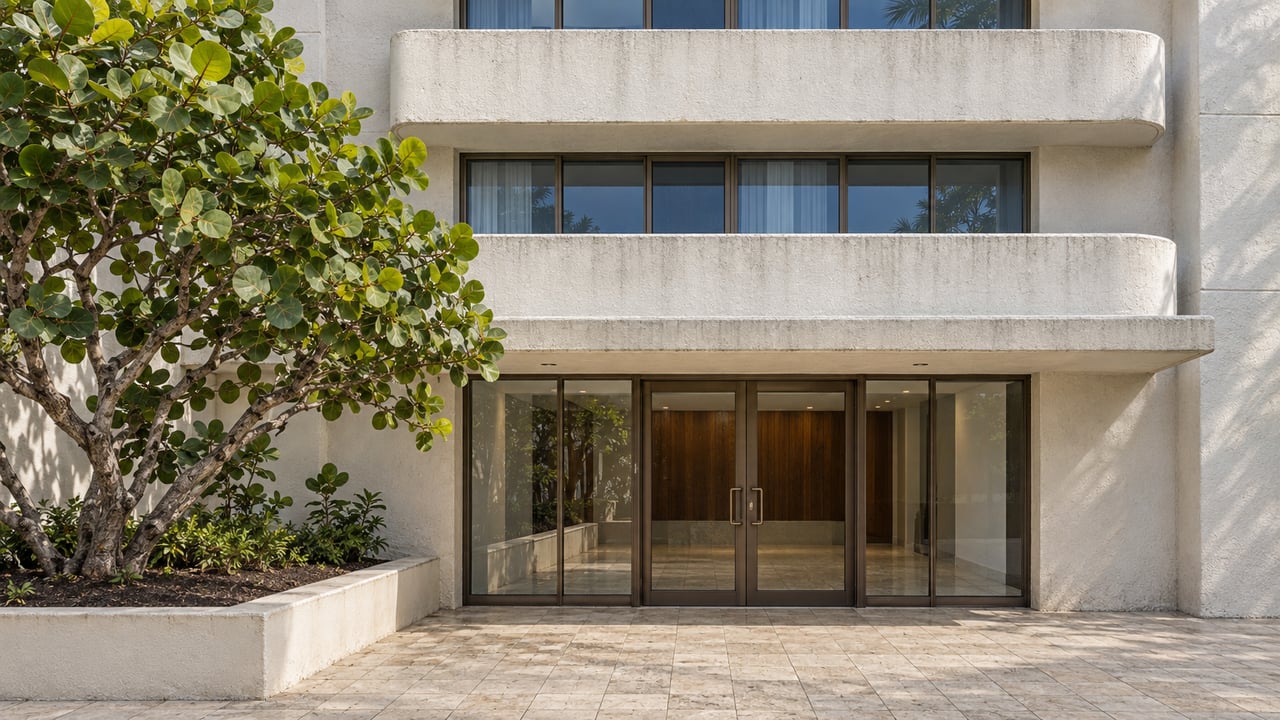
The usual counterargument for an aging bayfront building goes like this: if the finances are weak, a developer will eventually buy everyone out. Biscayne 21 at 2121 North Bayshore Drive is Edgewater's clearest recent test of that idea. The Miami Herald described it as a 1960s high-rise of 191 units. The Real Deal counts 192.
Here is how the buyout ran, as reported by the Herald and The Real Deal:
- 2019. The attempted buyout began, according to a resident quoted by the Herald.
- 2022. Two Roads Development paid about $150 million for most of the units, financed with a loan from Bank OZK, and launched sales of the first EDITION tower, planned at 55 stories and 185 units with prices starting at $1.7 million.
- After taking control of the board. The declaration required a unanimous vote to terminate. The developer-controlled board voted to lower that threshold to 80%.
- May 2023. Holdout owners sued. Florida's Third District Court of Appeal later sided with them, and the Florida Supreme Court declined to hear the case in October 2025.
- January 2026. A Miami-Dade judge ordered the developer to restore the partially gutted building at its own expense. Managing partner Taylor Collins estimated the cost at $65 million.
- February 2026. Two Roads filed a new suit asking the court to terminate the association because of the building's condition.
- Late summer 2026. The parties settled. A source told The Real Deal the developer paid about $50 million for the remaining units.
- September 2029. That is when Collins told the Herald he expects the EDITION Residences, Miami Edgewater, to be finished.
From the first approach to a settled site took about seven years, two lawsuits and a trip to the state Supreme Court's door. The $150 million bulk purchase in 2022 shows what a bayfront Edgewater building can be worth to a developer. It doesn't show when the last owners get paid. Even Collins, in his statement to The Real Deal, called on the Florida Legislature to "establish a clear, fair and predictable process for terminating condominium associations."

The buyout payout is pegged to the resale market
Florida's termination statute, section 718.117, sets the rules a developer works under. A residential plan of termination needs approval from at least 80% of the total voting interests. If 5% or more reject it, the plan cannot proceed, and another plan cannot be considered for 24 months.
When a single bulk owner holds at least 80% of the voting interests, the statute adds protections for everyone else. Other owners must receive at least 100% of fair market value, set by an independent appraiser. For an owner with a homestead exemption who is current on assessments and other association obligations, fair market value can be no lower than the original purchase price. Separately, any owner whose unit had homestead exemption status gets a relocation payment equal to 1% of the termination proceeds allocated to that unit. Occupants can also lease their former unit for 12 months if the units are offered for rent.
The statute defines fair market value by "similar units sold in other condominiums," including bulk sales but excluding wholesale or distressed prices. So the developer's payout is built on the same open-market sales that financed buyers create. If full review thins out the pool of financed buyers for older Edgewater buildings, those comparable sales soften, and so does the appraisal floor under any future buyout. Even a buyout price depends partly on how easily units in comparable buildings can be financed.
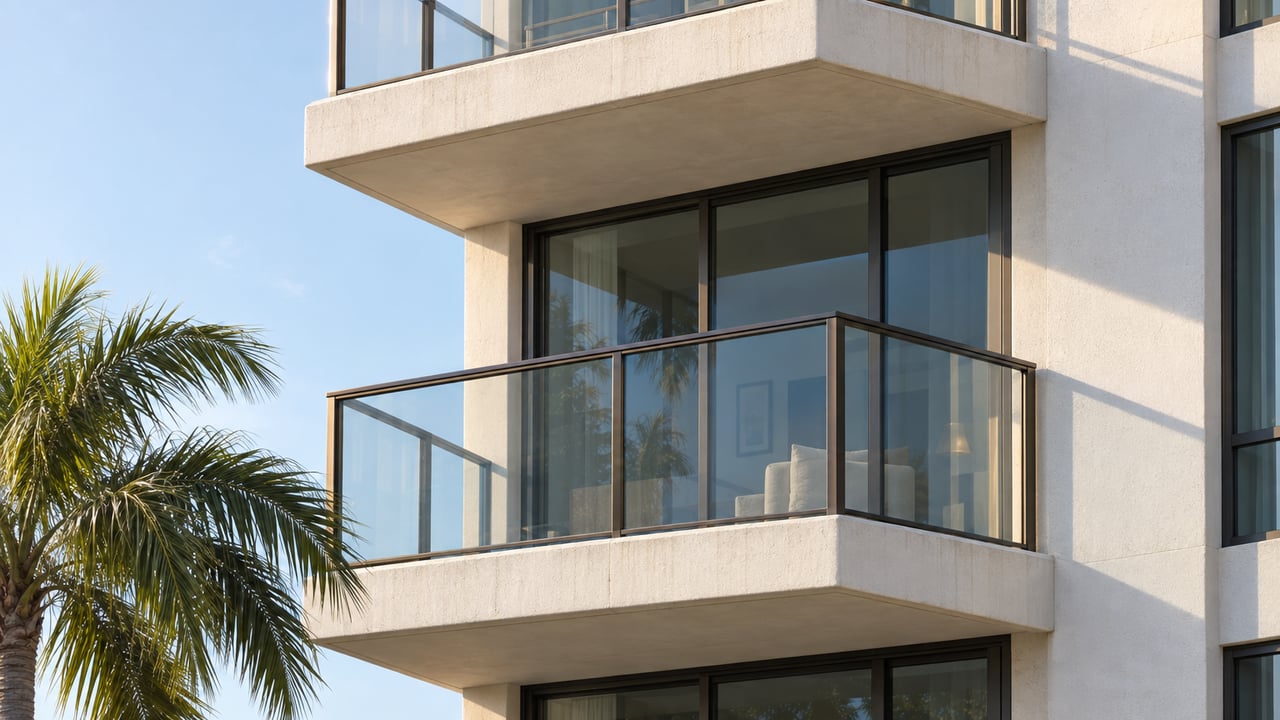
Analysts quoted by the Herald expect developers to keep looking. Jack McCabe said he anticipates more terminations as owners struggle with rising fees and insurance costs. Peter Zalewski of Condo Vultures said developers may target buildings with balconies, which are expensive to repair and maintain. Interest from developers is ongoing. Speed is what Biscayne 21 called into question.
Why a smaller financed pool matters now
Market conditions make the financing question sharper. In August 2026, Miami-Dade existing condos had 12.1 months of supply, which MIAMI REALTORS classifies as a buyer's market against a balanced range of six to nine months. In that same month, condo sellers got a median 94% of original list price, and the median time from listing to contract was 66 days. The countywide condo median was $408,000, down 0.49% year over year.
Cash covered 50.5% of Miami-Dade condo and townhome sales in August 2026. The other half depends on a loan, and Freddie Mac's 30-year fixed rate stood at 7.17% as of September 15, 2026. FHA is barely an option, with only 21 of 2,397 condo buildings in Miami-Dade, Broward and Palm Beach counties approved, or 0.9%. With a year of supply on the market, a building whose financed buyers drop out of the mix ends up selling only to cash, and cash buyers in a buyer's market have room to negotiate.
These are county figures, not Edgewater-only figures. Still, the mechanism applies directly to a neighborhood where 1960s bayfront buildings sit a few blocks from towers delivering in 2026 and later.

Pricing an older Edgewater unit this fall
Whether the next buyer can get a conventional loan now depends on the association's file, so it belongs in the pricing work. Before an offer on an older building, these requests are worth making through your agent and lender:
- Any structural or mechanical reports from the last three years, plus confirmation that required local inspections were passed
- The current budget's reserve line and any reserve study behind it, including the funding method it uses
- Open or planned special assessments, and whether the work they fund is safety-related and still incomplete
- The unit count, since buildings of 10 or fewer units may qualify for a waiver path
- Whether the board expects to meet the 15% reserve minimum that applies to applications from January 4, 2027
This post is general information about lending guidelines and Florida statute, not legal, tax or financial advice. Confirm how any rule applies to your purchase with your lender, attorney or tax professional.
If you're weighing an older Edgewater bayfront unit, or deciding when to list one before the January 2027 reserve step, The Kotelsky Group can go through the association's file with you and price the unit against the buyers who can actually finance it. Start with a free home valuation, and we'll take it from there.