A buyer finds the house first. A gated community west of the Turnpike, a lake view, a golf course fairway on the other side of the pool cage, priced at whatever the listing says. The inspection comes back clean. The lot is good. Then, somewhere between accepted offer and closing table, a document arrives that was never on the MLS sheet: a mandatory club membership invoice, due before the keys change hands.
That invoice is not a scam and nobody hid it. It is written into the deed restrictions of dozens of Boca Raton communities, and in 2026 it has become the single biggest variable in what a home in this market actually costs. The number attached to it has almost nothing to do with the price of the house. It has everything to do with which club the house sits inside, whether that club calls its fee refundable, and what the calendar says the day you close.
The Membership Isn't an Upgrade. It's a Closing Cost.
In a non-mandatory community, a country club membership is something you opt into, the way you might join a gym near a new apartment. In a mandatory community, it is a condition of ownership, the same way a homeowners association fee is a condition of ownership. You do not get to buy the house and skip the club. The two are bundled at the closing table.
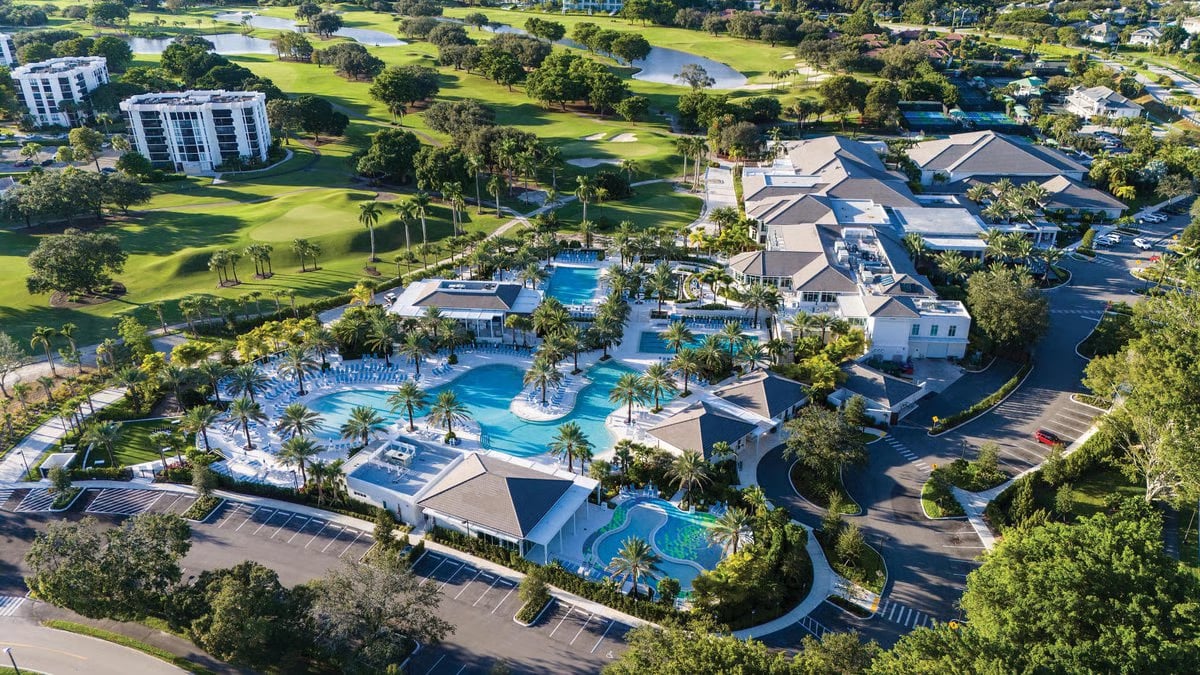
Boca Raton has both kinds of communities inside its borders, sometimes within a few miles of each other, and the mandatory ones charge wildly different entry numbers depending on the club. Boca Woods, a mandatory golf-only community of 645 homes built around two 18-hole courses, currently requires $150,000 as of a fee increase that took effect March 1, 2026, up from $120,000 before that date. Woodfield Country Club, home to 20 villages ranging from patio homes to multimillion-dollar estates, currently charges $225,000 for Full Equity membership, with $45,000 of that refundable, or $170,000 for Standard Equity with $38,000 refundable. St. Andrews Country Club, anchoring 740 custom estate homes around two championship courses including an Arnold Palmer Signature design, currently requires a $500,000 club contribution plus a separate $50,000 property owners association contribution, a combined $550,000 that took effect September 1 of this year, up from $450,000 plus the same $50,000 POA charge before that date.
None of those three numbers scale with the price of the house. A $750,000 townhome and a $5 million estate in the same club, at the same membership tier, pay the identical entry fee. That flat structure is the first thing that separates Boca's country club market from almost anything else in South Florida real estate, where cost typically tracks square footage or lot size. Here, the biggest line item on your closing statement can be completely disconnected from what you paid for the house.
What the Clubs Are Charging Right Now
Club | Current mandatory entry fee | What's changing |
|---|---|---|
Boca Woods | $150,000 (as of March 1, 2026) | Increased from $120,000 earlier this year |
Woodfield | $225,000 Full Equity ($45,000 refundable) / $170,000 Standard ($38,000 refundable) | Full Equity rises to $300,000 on November 2, 2026 |
Boca West | $150,000 club joining fee + $10,000 POA contribution | Rises to $215,000 plus $20,000 POA on October 1, 2026 |
Broken Sound | $130,000 to $225,000 by tier, non-refundable | Equity eliminated entirely; all tiers non-refundable |
Addison Reserve | $400,000 Full Golf equity | Increased from $325,000 effective January 1, 2026 |
St. Andrews | $500,000 club contribution + $50,000 POA = $550,000 total | Increased from $450,000 plus $50,000 POA on September 1, 2026 |
Every one of these is a mandatory figure, due at or before closing, on top of the purchase price of the home.
The Calendar Is Doing the Market's Job
What makes this fall different is not any single fee. It's that three separate clubs have set three separate deadlines within roughly nine weeks of each other. St. Andrews already crossed its line on September 1. Boca West crosses its on October 1. Woodfield follows on November 2.
A buyer under contract on a Boca West home right now is looking at a $65,000 difference in the club fee alone depending on which side of October 1 the closing lands. A buyer eyeing a Woodfield Full Equity property faces a $75,000 gap on either side of November 2. Neither gap has anything to do with negotiating the price of the house. It is purely a function of the date on the closing documents.
This is the part that catches out-of-state buyers off guard more than any other detail in a Boca Raton purchase. They negotiate hard on the home price, save ten or twenty thousand dollars through back-and-forth with the seller, and then lose far more than that to a club deadline nobody mentioned during the tour. The fix isn't complicated. It's asking, before you write an offer, whether the club has a scheduled increase and where your expected closing date falls relative to it.
Refundable Versus Non-Refundable Is the Number That Actually Matters
Two clubs can post the same headline fee and still be completely different financial commitments, because the split between refundable and non-refundable dollars varies by club and by membership tier.
At Woodfield, $45,000 of the $225,000 Full Equity fee comes back to you when you resign or sell. The remaining $180,000 does not. At Broken Sound, the club eliminated its equity structure entirely, so every dollar of the $130,000 to $225,000 range is gone the moment you pay it, with no refund built in regardless of how long you own the home. St. Andrews's club contribution is structured as a non-refundable payment, separate from the $50,000 POA charge.
That distinction is worth six figures over the life of ownership, and it rarely shows up in the casual conversation about "the club fee." Two buyers comparing a $225,000 number at one club and a $200,000 number at another might assume the second is the better deal, when the second club's entire fee is non-refundable and the first club returns a fifth of it at resale.
Not Every Boca Community Charges a Second Price
The mandatory-membership model is common in Boca Raton, but it is not universal, and buyers who want the golf-community feel without the flat entry fee do have options inside the same city limits.
The Oaks, in west Boca Raton, is structured differently from any of the clubs above. Homeowners get full access to the clubhouse, twelve Har-Tru tennis courts, a resort pool, spa, fitness center, and dining, all funded through a monthly HOA of roughly $1,066, with no separate club initiation fee and no annual dues on top of it. Home prices there currently run from about $2.8 million to $3.6 million. Boca Lago operates as a non-equity club, positioning itself around market-competitive initiation fees and monthly dues rather than a large upfront equity contribution. Boca Pointe offers membership on an optional basis, with residents choosing from several social and golf plan tiers rather than being bound to one mandatory structure at closing.
None of these are better or worse than a mandatory club by default. They are a different bet: lower or no upfront number, funded instead through the monthly HOA or an optional membership a buyer can decline. For someone comparing total cost of ownership rather than clubhouse square footage, that structural choice deserves the same scrutiny as the home itself.
The Three Numbers That Make Up a Real Offer
The listing price in a Boca Raton country club community is one number out of three. The second is the mandatory entry cost, refundable or not, and whether a fee increase falls inside your closing window. The third is the annual carry, the yearly dues that continue for as long as you own the home, which run anywhere from the high teens of thousands to the mid forties of thousands depending on the club and membership category.
Add those three together before comparing two homes, not after. A house priced $200,000 lower than another can still be the more expensive purchase once the club math is included, and a house that looks identical on paper to a listing in a neighboring community can carry a membership obligation five times larger, purely based on which gate it sits behind.
A Few Direct Questions
Is the club fee negotiable with the seller? Generally no. The fee is owed to the club itself, not the seller, so it sits outside typical purchase price negotiations. What can sometimes be negotiated is the closing date, which matters when a fee increase deadline is approaching.
Does the equity portion count toward anything if I never sell? No. A refundable equity contribution is only returned when you resign your membership or sell the home. It does not reduce annual dues or offset other club charges while you own the property.
Can I buy the home without joining the club? In a mandatory community, no. Membership is a condition of the deed, not an optional add-on, which is why confirming a club's status before writing an offer matters as much as confirming the school district or the flood zone.
If you're comparing homes across Boca Raton's country club communities and want the current fee schedule, the refundable-to-non-refundable breakdown, and any pending assessments pulled before you tour, that is exactly the groundwork The Kotelsky Group puts together for buyers before they fall in love with a house. And if you already own inside one of these gates and are wondering how a neighboring club's new entry fee affects your own resale pool, get a free home valuation today.