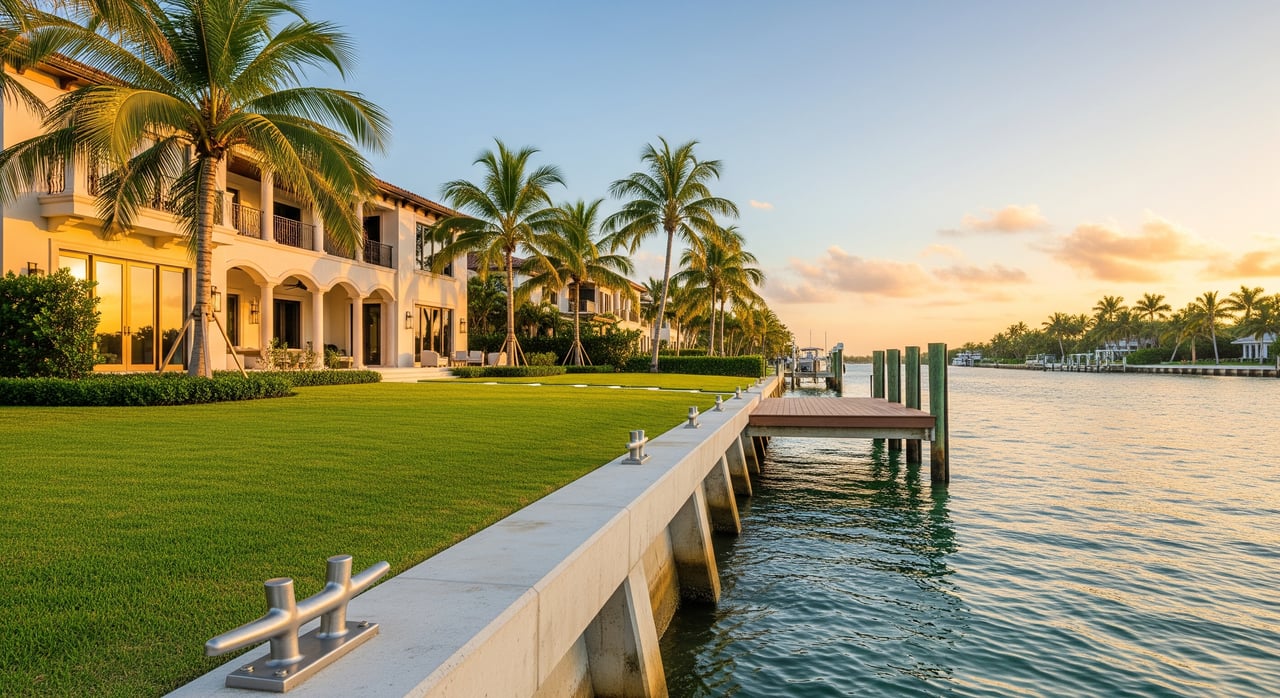
Owning on the water in Hollywood is a dream until a tired seawall turns into a surprise capital call. If you hold or plan to buy a canal or lakeside property, your seawall is both a safety system and a major line item that can move your ROI. You want a budget that is realistic, defensible, and aligned with local rules and timelines. This guide shows you how to plan elevations, permits, costs, and scenarios so you can protect value and avoid delays. Let’s dive in.
Why seawalls drive ROI in Hollywood
Hollywood’s waterfront sits within a dynamic system of tides, seasonal high water, canal management, storm surge, and long-term sea-level rise. Those forces set how high your wall should be and how fast it can wear. They also shape insurance costs, lender requirements, and marketability when it is time to sell. Getting this right can make the difference between smooth ownership and a rushed, expensive upgrade.
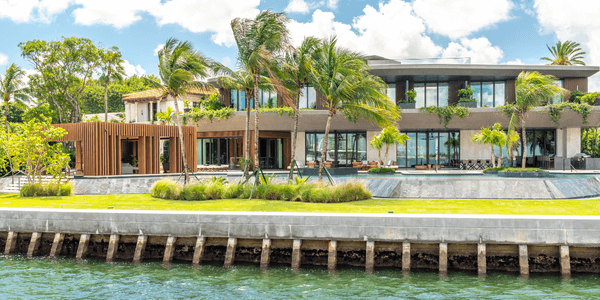
Start with verified elevations
Anchor every decision to a consistent vertical datum. In South Florida, NAVD88 is commonly used for construction and FEMA documents. Order an as-built or topographic survey that shows the current top-of-seawall elevation against NAVD88. Verbal estimates or old maps are not enough for design or permitting.
Review FEMA Flood Insurance Rate Maps to identify flood zones and Base Flood Elevations for your parcel. Use nearby NOAA tide records to understand tides and seasonal patterns. If you are on a canal, coordinate with Broward County and the South Florida Water Management District to learn about historic high-water events in your canal system.

Plan for sea-level rise scenarios
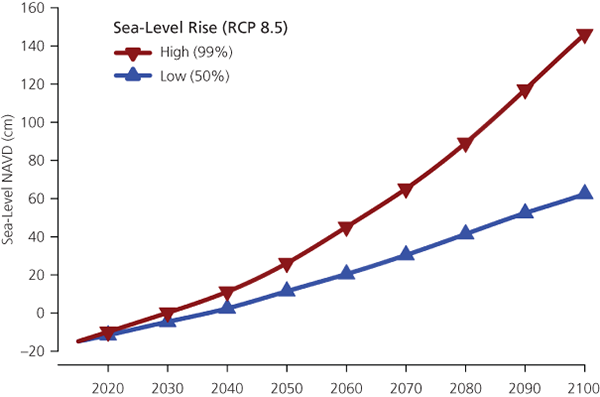
Use regionally relevant sea-level rise projections that align with Broward County and the Southeast Florida Regional Climate Change Compact. Model at least low, median, and high scenarios across 10, 30, and 50-year horizons. This helps you see when a future ordinance or lender policy could force an earlier upgrade. For a typical 5 to 30-year hold period, show a baseline with no uplift and one or two SLR scenarios so you can capture escalation risk.
Design elevation, runup, and freeboard
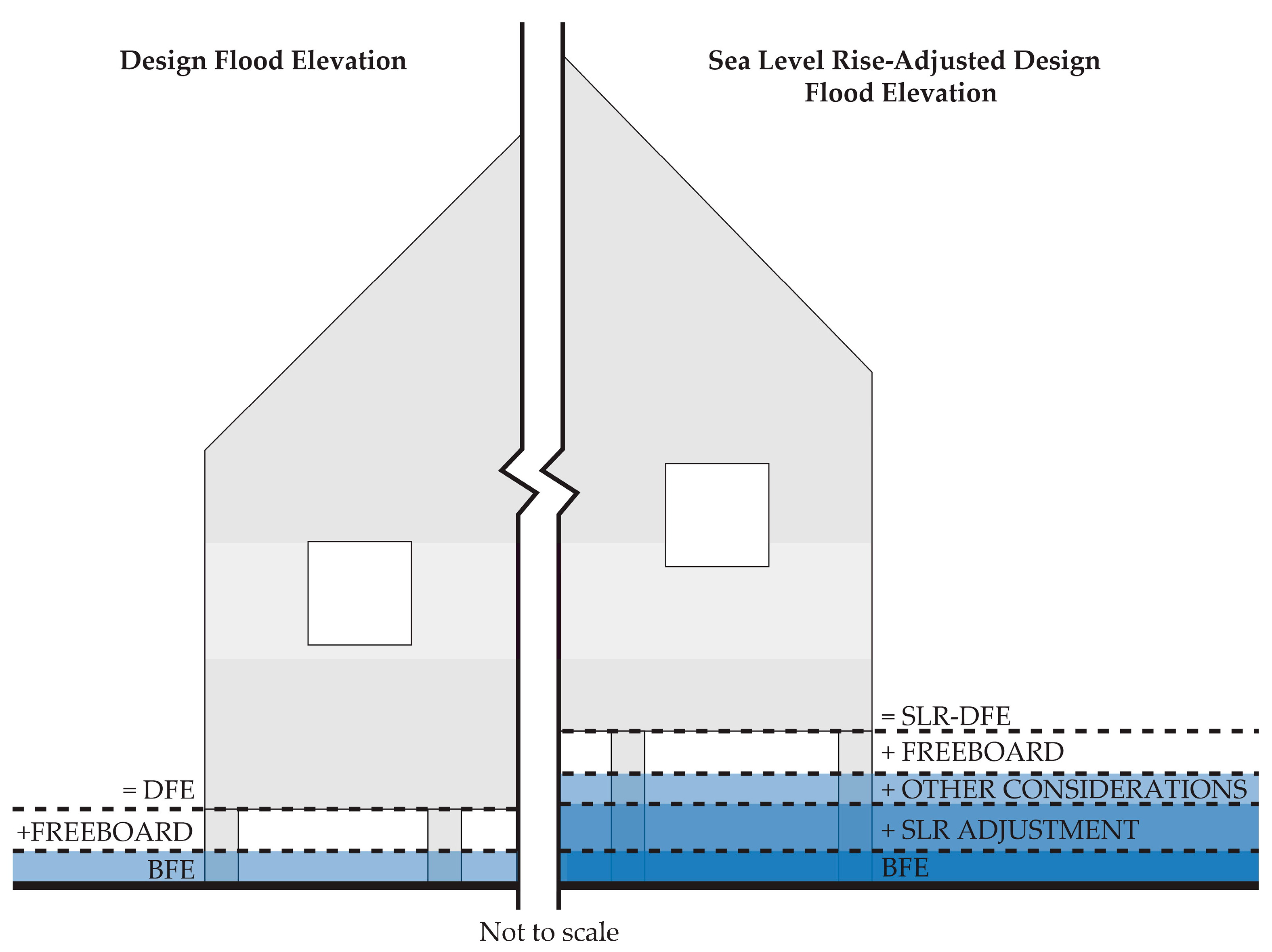
Top-of-wall elevation is not just about still water. Engineers also account for wave runup, overtopping, and a freeboard allowance to cover uncertainty. Local codes can reference these allowances. Ask your engineer to document how tides, storm events, and runup inform the final target elevation for your site.
Site soils and geotechnical checks
Subsurface conditions drive constructability, durability, and cost. Shallow limestone and deeper sands behave differently, which can influence tieback design, toe protection, and long-term maintenance. Include a geotechnical investigation in your budget so you are not surprised by subsurface conditions once construction begins.

Choose the right wall type
Common systems and lifespans
- Cast-in-place concrete: durable and higher initial cost with potential 50-plus year service life when maintained.
- Precast concrete panels with tiebacks: modular and long-lived with planned joint and tie maintenance.
- Steel or vinyl sheet pile: widely used; steel needs corrosion protection to achieve target life.
- Timber bulkheads: lower up-front cost but shorter life and higher maintenance needs.
- Stone revetments: good for erosion control in some settings, but not always suitable for tight canal lots.
Failure modes and maintenance
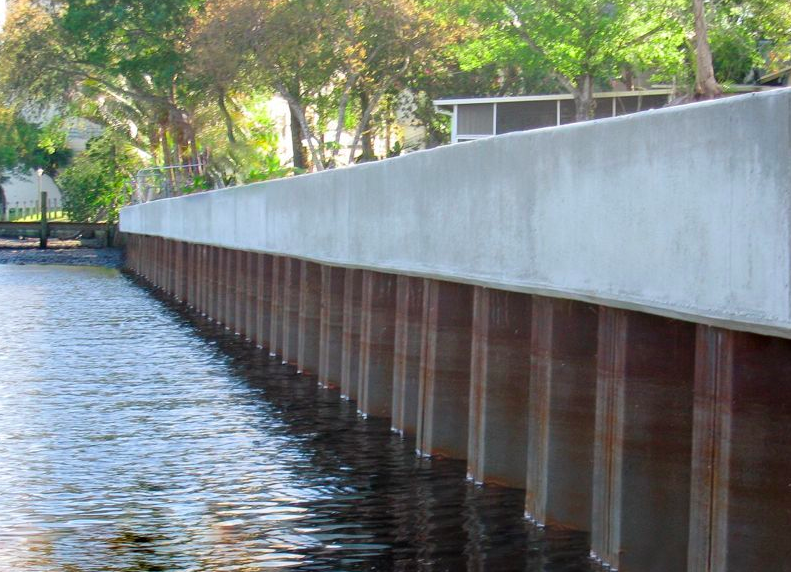
- Typical failure modes: steel corrosion, tieback or anchor failure, concrete spalling, panel joint failures, settlement, toe scour, and cap damage.
- Routine tasks: inspections, cap or tie replacements, cathodic protection for steel, concrete patching and grouting, and toe protection at the base of the wall.
- Budget both small periodic repairs and larger renewals to extend useful life.
Permits and compliance in Hollywood
Expect to coordinate with multiple agencies depending on your scope:
- City of Hollywood Building and Engineering for local permits, seawall and dock approvals, and local elevation standards.
- Broward County for coastal management and canal-related work.
- Florida Department of Environmental Protection for coastal construction and CCCL questions where applicable.
- U.S. Army Corps of Engineers for activities in navigable waters or federal wetlands.
- FEMA flood maps inform elevations and insurance but are not a construction permit.
- South Florida Water Management District for work that touches county canal systems.
Maintenance-only work can move faster if you do not change alignment, height, or footprint. Replacement or height increases usually trigger full engineering review and inter-agency coordination. A practical combined timeline from planning through construction ranges from a few months for limited maintenance to 6 to 18 months for non-emergency replacements that require multiple permits. Local workload can extend these timelines.
Compliance can force earlier upgrades
Municipal and county ordinances increasingly set minimum top-of-seawall elevations for new or replacement walls, often tied to future planning years. If your project qualifies as a substantial replacement, you may need to meet current standards sooner than expected. Lenders and insurers can also require repairs or elevation increases to maintain coverage or favorable rates. Build a scenario that assumes an earlier upgrade so you are not caught off guard during a refinance or sale.

Build a seawall budget that holds up
Include all phases of work, not just materials and installation. A complete budget should include:
- Preliminary: boundary and topographic survey, geotechnical report, and any environmental surveys.
- Design and permitting: marine structural engineering, application fees at city, county, state, and federal levels, and agency coordination.
- Construction: mobilization, demolition and disposal, access by land or water, panels or piles, tiebacks or anchors, caps, and toe protection.
- Environmental compliance: turbidity barriers, restoration if required, and any mitigation fees.
- Contingency: marine work deserves a higher contingency to cover subsurface surprises or permit-driven scope changes.
- Maintenance reserve: an annual allowance for inspections and minor repairs.
- Soft costs and financing: legal, owner’s rep or project management, and any construction interest during the build.
Escalate marine construction costs at a rate higher than general inflation. Document your escalation and contingency assumptions so investors and lenders can underwrite them with confidence.
Use a sinking fund for replacement
A sinking fund helps you set predictable yearly accruals toward a future replacement. Estimate the replacement year, apply an escalation rate to today’s cost, and divide by years to replacement for a simple annual reserve. You can also amortize using a real discount rate to set a level annual contribution. The key is to make the reserve explicit in your pro forma so capital needs do not surprise you.
- Future Replacement Cost = Current Cost × (1 + escalation)^(years)
- Annual Reserve (simple) = Future Replacement Cost ÷ years
- Annualized Cost (amortized) = Replacement Cost × [i(1+i)^n] ÷ [(1+i)^n − 1]

Model three pro forma scenarios
- Base: Only maintenance during the hold. No elevation changes and no compliance triggers. Carry an annual maintenance reserve and watch condition data.
- Mid: Planned full replacement in a defined year, such as year 10, using median sea-level rise assumptions. Include design and permit in the prior year, then construction in the replacement year.
- High or regulatory: Earlier upgrade in years 3 to 7 due to a local ordinance, lender requirement, or a repair that crosses the threshold into substantial replacement. Model permit and construction staging and the effect on cash flow, NPV, and IRR.
Run sensitivities on escalation, years to replacement, and permit delays. This shows how long review timelines or higher marine inflation can change returns.
Schedule and delivery timeline
Use a simple roadmap to keep planning on track:
- Pre-work: survey, geotechnical investigation, and preliminary concepts, 2 to 8 weeks.
- Design and permit package: engineering design and application preparation, 4 to 12 weeks.
- Agency reviews: timing varies. Plan for multiple months when state or federal permits are required.
- Contractor procurement: bids and scheduling, 4 to 12 weeks depending on season and availability.
- Construction: days to months based on length and complexity.
- Closeout: final inspections, approvals, and records, 2 to 8 weeks.
Confirm current timelines with the City of Hollywood and Broward County before you set a start date.

Buyer strategy on Hollywood waterfronts
Order a recent marine-structure inspection during diligence. Ask for the current top-of-seawall elevation in NAVD88 and a clear opinion of remaining useful life. If issues are found, request a price adjustment, a seller credit, or an escrow for required repairs or replacement. Stage design and permitting early if your hold plan will likely trigger a replacement within your horizon.
Seller strategy to protect value
Disclose known seawall conditions and any notices from local authorities. If your wall is near end of life, consider starting survey and design now so a buyer can assume a ready-to-file package. This can reduce financing friction and keep your timeline intact. Document maintenance history and any inspection reports to build buyer confidence.

Quick checklist to get started
- Obtain a boundary and topographic survey with top-of-seawall elevation in NAVD88.
- Pull FEMA flood data and identify your flood zone and BFE.
- Consult a licensed marine structural engineer for a condition assessment and target elevation plan.
- Confirm permit requirements with the City of Hollywood, Broward County, FDEP, USACE, and SFWMD as applicable.
- Build Base, Mid, and High scenarios with explicit escalation and contingencies.
- Set a sinking fund contribution and a maintenance reserve in your budget.
- Align contractor selection with local references and marine experience.
Protecting ROI on the water in Hollywood starts with clear elevations, realistic timelines, and a pro forma that respects compliance risk. When you plan for scenarios and fund reserves, you reduce surprise capital calls and keep insurance, lenders, and buyers on your side. If you want help aligning property strategy with practical seawall planning, let’s talk. Connect with Unknown Company to map a path that fits your hold period and goals.

FAQs
Who pays for seawall work on Hollywood waterfronts?
- The shoreline property owner usually pays, unless an association or public agency maintains the wall; confirm shared-wall agreements for cost sharing.
How do permits treat repair versus replacement in Broward?
- Maintenance-only work can be expedited, while substantial replacement or height increases often require full compliance with current standards and a longer review.
How long does a typical seawall replacement take from start to finish?
- Plan for design and permitting followed by construction over several months, with total timelines commonly ranging from a few months to 6 to 18 months depending on scope and agencies.
Are grants available for residential seawall upgrades in South Florida?
- Large community resilience grants exist, but individual residential seawalls are less commonly funded; monitor state and county programs for eligibility changes.
How do seawall conditions affect financing and insurance for a sale?
- Lenders and insurers may require repairs, elevation upgrades, or escrowed funds, and buyers often request a marine-structure inspection to proceed with financing.